
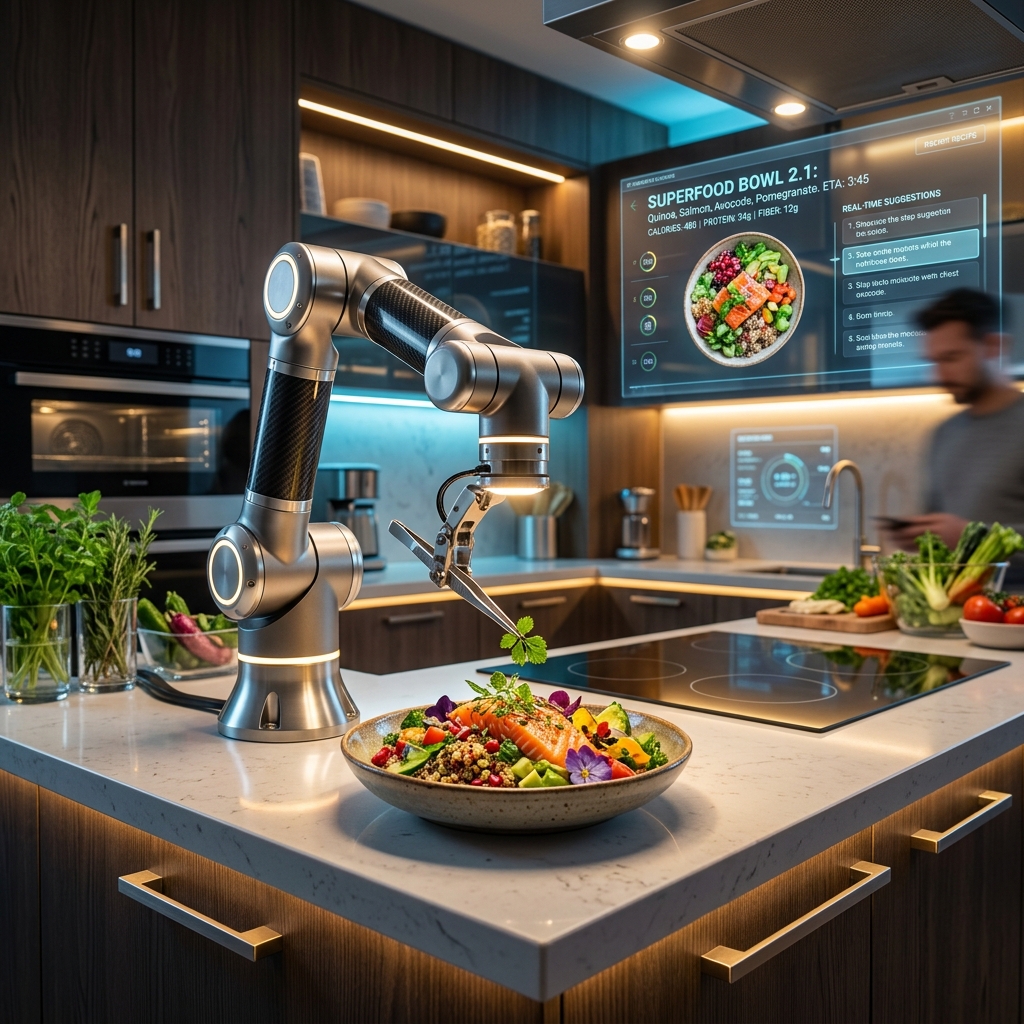
Artificial intelligence (AI) is rapidly making the transition from technology laboratories to households. In the past, home cooks relied on unchanging recipes or searched endlessly online for them. Today, AI platforms can generate dynamic, personalized cooking guides within seconds. This technology analyzes taste profiles, ingredient combinations, and nutritional value to create ideal dishes based on available ingredients. AI systems can simplify time-consuming steps, from choosing what to eat to preparing the meal, and encourage people to cook more often. From manually searching for recipes to algorithms that generate them automatically, this technology is revolutionizing daily life and saving a significant amount of time every week.
AI-driven Personalized Nutrition
You can only achieve some nutritional goals through careful management and control of ingredient quantities. AI applications can take complex dietary requirements into account, such as a low-salt, high-protein, or gluten-free diet, and quickly provide recipes that meet those requirements. Users do not need to manually calculate macronutrients; they simply enter their daily calorie needs into the AI nutrition platform, which automatically generates accurate daily menus. These intelligent technologies learn the user’s taste preferences over time and adjust taste recommendations based on previous feedback. Thanks to this highly personalized customization, even strict diet plans can be enjoyable, significantly increasing the likelihood of good long-term health.
Simple Meal Planning
Planning dinner for the week often requires taking schedules, grocery lists, and family preferences into account. Think of artificial intelligence as your digital cooking assistant. It can create weekly meal plans and ensure that every dish uses similar ingredients to prevent waste. For example, a user can tell the AI that they have bought a large bag of spinach, and the system will intelligently distribute this ingredient across smoothies, salads, and pasta dishes throughout the week. This saves on food costs and prevents fresh vegetables from spoiling in the refrigerator. AI-driven meal planning can reduce the psychological stress of choosing dinner every day.
AI-Driven Cooking Skills
But smart cooking software does much more than just provide ingredient lists—it can also offer real-time, flexible cooking strategies. If a home cook discovers they are missing a kitchen tool or ingredient while cooking, AI can quickly suggest practical alternatives. For example, if a recipe requires a food processor, AI can rewrite the instructions to explain how to cut vegetables by hand. Advanced algorithms also use the weight and size of proteins to accurately calculate cooking times for dishes. This proactive assistance helps inexperienced cooks learn the basic steps and prevent costly cooking disasters.
Challenges in the kitchen
Every home cook faces inevitable challenges in the kitchen, such as a shortage of spices or unexpected food allergies among guests. Artificial intelligence algorithms can solve these problems immediately by recommending suitable substitutes to preserve the flavor of dishes. For example, if a recipe requires buttermilk but the user only has regular milk and lemon juice, AI will suggest suitable substitution ratios. They can also help save failed dishes by providing chemical and culinary solutions, such as restoring overly salty soups or spoiled sauces. Direct, accurate problem-solving gives even stressed cooks more confidence.
The Future of Food and Artificial Intelligence
The application of artificial intelligence in the kitchen is only just beginning. In the future, AI systems will be able to communicate with smart kitchen appliances, track food stocks, and automatically adjust temperatures. Imagine refrigerators automatically generating and distributing recipes based on food expiration dates. Furthermore, these algorithms can integrate highly localized seasonal data, promoting sustainable eating habits by prioritizing recipes with local, seasonal ingredients. Over the next ten years, food preparation, data, and the physical cooking environment will seamlessly align.
Artificial Intelligence in the Kitchen
With just a smartphone and a bit of experimentation, you can integrate artificial intelligence into your daily meals. Download an AI text generator or a professional smart cooking app to get started. Enter five random ingredients you have in your pantry and let the software generate a recipe that is ready in 30 minutes. View the result and adjust the suggestions to your taste; you will quickly learn how to “talk” to this technology efficiently. Once you use these tools to plan your weekly groceries, you will notice that it saves you both time and money.
The Next Step Towards Smart Cooking
The switch to an AI-assisted kitchen ultimately gives you more free time and tastier meals. You can use algorithms to take time-consuming meal planning and nutritional calculations off your hands, so you can focus on the joy of cooking and sharing food with others. Start smart cooking this week with an AI-generated recipe to clear out your pantry instead of ordering takeout. Try out a few AI platforms to find the interface that best suits your cooking style.
Important Facts About AI Cooking
Many people are concerned about the cost of smart kitchen software. While the simplest AI text generators and cooking apps for beginners are completely free, making the technology very accessible, more comprehensive premium versions require a monthly subscription. Users often wonder how their nutritional data is handled in terms of privacy and data security. Reliable AI platforms encrypt your unique health data and dietary restrictions, but be sure to read the app’s specific privacy policy before providing important medical information. Users often wonder if AI is reliable regarding nutritional accuracy for people with severe food allergies. AI performs well in screening for allergens, but for people with life-threatening allergies, generated recipes and ingredient lists must still be carefully checked to ensure safety.
Another frequently asked question concerns the learning curve of using AI for food preparation. Most users indicate that after three to four practice sessions, they can formulate recipes correctly for optimal cooking results. Finally, many wonder if AI will completely replace recipes. AI will not replace static recipes but rather be an active resource that offers practical solutions for weeknight meals, while traditional recipes remain beloved for their carefully crafted design and compelling stories.